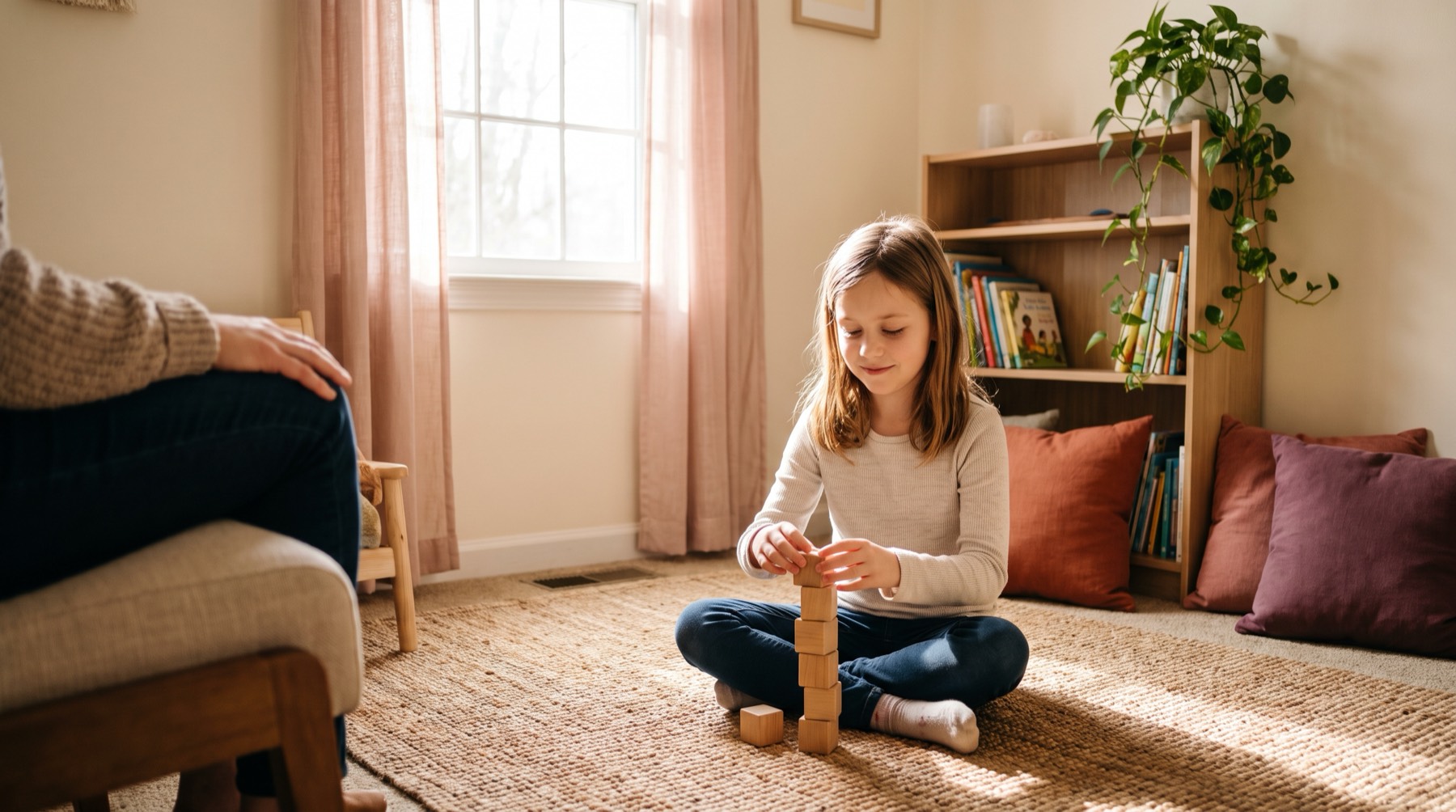
Childhood anxiety rarely announces itself as anxiety. It arrives as stomach aches on school mornings, meltdowns over homework, refusal to sleep alone, or a teenager who has quietly stopped doing things they used to do.
Anxiety that is beginning to limit your child’s world
What we are aiming for
Your child doesn’t need to stop feeling anxious. They need to learn that anxiety doesn’t get to decide what they do.
That is a skill, and it is teachable. Children and teenagers learn it by doing the hard thing in graded steps, with success built in early and the adults around them holding steady.
What we treat: anxiety in children and teens
Separation anxiety and difficulty sleeping alone
Obsessions and compulsions
School refusal and morning battles
Social anxiety and selective mutism
Generalized worry, perfectionism and the child who cannot stop asking whether everything is okay
Panic and health anxiety in adolescents
What anxiety treatment looks like
Understand
Your child learns what anxiety is doing in their body and their brain, in language that fits their age.
Practice
They practice skills for handling anxious thoughts and feelings, and try them out between sessions.
Get Brave
They face feared situations gradually, so confidence grows out of experience rather than reassurance.
And we work with you, too.
Parents are active participants in treatment, particularly with younger children. Sessions typically include parent time, and there is practice to carry into the week.
Sometimes the things we do to help our children feel better in the moment can accidentally keep anxiety going. We’ll help you understand what’s happening and learn how to respond differently.
What changes look like
Going to school
Sleeping independently
Trying new things
Participating in activities
Handling uncertainty
Making friends
Recovering from anxious moments
Needing less reassurance
My husband and I were very lucky to find Dr. Rhule when our son was struggling with anxiety as a toddler. With her help, our son learned to manage his anxiety, adjusted to school, and eventually thrived both academically and socially.
If you allow it, Google Analytics shows us which pages people find useful. It never sees what you type into a form or the chat. We never sell your information, and you can change your mind anytime. Privacy Policy