
Could couples therapy fit what we’re facing?
Couples therapy may fit your relationship when conflict keeps returning, communication has broken down, you feel emotionally distant, or trust has been damaged. We offer couples therapy for concerns including communication, conflict, infidelity, relationship wounds, emotional disconnection, non-monogamy, and interracial relationships.
The decision does not depend on whether you can describe your relationship perfectly. It starts with identifying what keeps bringing you back to the same painful place and deciding what kind of support you want. This form of psychotherapy involves partners working with a trained therapist to address conflict, improve communication, and strengthen their emotional bond. That makes it different from simply having another private conversation after an argument.
You may be considering support because one issue has become hard to discuss, because the same argument keeps changing shape, or because you want help talking about intimacy, identity, or trust. You do not need to wait until every concern is clear before asking about fit. A first conversation can help you describe the concern and ask what kind of care may match it.
This guide focuses on fit rather than a promised result. It can help you sort your main concern, the relationship context you want understood, and whether therapy or coaching is the kind of support you want to explore.
Our work includes couples, LGBTQ+, nonmonogamy, relational dynamics, and Gottman Therapy. We also offer an identity-affirming approach for Black, Brown, Indigenous, Queer, and TGNC people. If those areas connect with what you want held in the conversation, include them when you describe your relationship concerns.
Match your main relationship concern to the support you’re seeking
Your main concern can help you decide what to bring into an initial inquiry. You may have several concerns at once, but naming the one that feels most urgent gives the conversation a starting point.
- Communication breakdown: Couples therapy can provide a structured setting to explore relationship dynamics and develop healthier ways of relating. Bring examples of what becomes hard to say, hear, or understand between you.
- Recurring conflict: If disagreements remain unresolved or follow a familiar pattern, therapy may give you a place to examine that pattern and practice addressing conflict without blame, criticism, or withdrawal. Describe what usually happens before, during, and after the argument.
- Trust after infidelity or betrayal: After infidelity or another betrayal, you can bring trust concerns into couples therapy and ask what kind of support may fit. You can name what you want support discussing without presenting a complete plan for repair.
- Intimacy or emotional distance: Emotionally Focused Therapy centers emotional bonds, underlying feelings, and attachment needs, with space for partners to express vulnerability. If closeness has changed, describe whether the concern is emotional, physical, sexual, or connected to another part of the relationship.
These categories are starting points, not diagnoses. A concern may fit more than one category. Start with the concern you can name most clearly, then add the context that you want the therapist to understand.
Naming a concern does not mean deciding why it is happening. Communication breakdown may sit alongside emotional distance; recurring conflict may include trust questions; intimacy concerns may be connected to vulnerability or a change in how partners relate. These categories help you describe the conversation you want to have. They do not assign a diagnosis or predict what therapy will do.
It can help to separate the topic from the pattern around it. A topic might be sex, family involvement, non-monogamy, or a past betrayal. The pattern might be avoiding the subject, returning to the same argument, feeling unheard, or struggling to express vulnerability. Both details may matter when you ask about support. You can say which part feels most urgent and which part you are still trying to understand.
If the relationship includes different cultural backgrounds, identities, or expectations about communication, those details may belong in the fit conversation. You do not have to explain every area. Mention the context that changes what you want the conversation to recognize.
Our couples-therapy areas include communication, conflict, infidelity, relationship wounds and forgiveness, emotional disconnection, non-monogamy, and interracial relationships. Those areas can give you words for a first inquiry, even when your concern does not fit one label neatly. The point is to describe the relationship concern and the support you want to explore, not to establish that therapy is the right choice before you ask.
If any of these affect the way conflict, intimacy, trust, or connection shows up for you, say so in your inquiry. That gives the practice a clearer picture of the support you are seeking.
When communication and conflict keep repeating
Communication problems and repeated conflict are common reasons couples seek therapy. You may notice the same disagreement returning, conversations ending in silence, or attempts to solve a problem turning into blame, criticism, or withdrawal. The pattern matters because the subject of the argument may not explain why the conversation keeps breaking down.
Our relationship-focused couples therapy uses a judgment-free, vulnerability-based approach in a structured, supportive setting where partners can explore relationship dynamics and underlying issues. One described aim is to practice addressing conflict without blame, criticism, or withdrawal. That does not mean every disagreement will disappear or that both partners will want the same thing. It means the work can focus on how you approach a difficult subject as well as what you are discussing.
Before you reach out, you can write down three details:
- What topic brings you into conflict most often.
- What each conversation tends to sound or feel like.
- What you want help understanding, expressing, or discussing.
This short list is a communication aid, not a test of your relationship. It gives you language for the first inquiry and helps separate the immediate argument from the larger pattern you want to examine.
Communication style can also reflect cultural or family-of-origin norms. Direct and indirect communication, emotional expressiveness, conflict avoidance, family involvement, and expectations about decision-making may all shape the way partners interpret each other. If those differences are part of your conflict, include them rather than reducing the problem to one partner being a poor communicator.
We specialize in relational dynamics, and we offer couples therapy addressing conflict and communication. You can ask about support for the pattern you are facing while keeping your own description specific: what happens, what you have tried, and what you want to understand next.
When trust or intimacy has been affected
Trust concerns can follow infidelity, dishonesty, or another betrayal, and they may affect much more than one conversation. It does not require you to promise a particular outcome before you begin.
You may want support naming what happened, discussing its effect on the relationship, or understanding what each partner needs to talk about it. You may also be unsure whether you want to repair the relationship, change its structure, or first understand your own position. You can bring that uncertainty into an inquiry. The useful first step is to describe the trust concern plainly and ask what kind of support may fit.
Our couples therapy includes infidelity, relationship wounds and forgiveness, and emotional disconnectedness. Those service areas give you language for concerns that may otherwise feel too broad to explain. Use the words that fit your experience, rather than forcing the situation into a label.
Intimacy concerns may involve emotional distance, changes in physical or sexual closeness, or difficulty expressing vulnerability. Emotionally Focused Therapy centers emotional bonds, underlying feelings, and attachment needs. This approach gives partners space to explore feelings and vulnerability rather than treating intimacy as a single behavior to fix.
If intimacy is the concern you want to discuss, consider what kind of conversation you want help having. You might want to talk about distance, desire, fear of rejection, different expectations, or the effect of another relationship concern on connection. Your answer can remain partial. A first inquiry only needs enough detail to explain why you are seeking support and what you hope to discuss.
What RelationshipHQ offers for different relationship contexts
Our work centers on couples, LGBTQ+, nonmonogamy, relational dynamics, and Gottman Therapy.
That range matters because the same word—conflict, trust, or intimacy—can carry different meaning in different relationships. For example, a couple discussing whether to open a relationship may need room to talk about agreements, expectations, and connection. Partners in a non-monogamous relationship may want their relationship structure understood without treating it as the problem. An interracial couple may want cultural and racial experiences included in the conversation rather than treated as background detail.
You do not need to choose a method or explain your relationship structure in clinical language before you ask about support. Name the relationship context, the concern you want to address, and any approach you want to explore. We can use that information to understand what kind of care experience you are asking about.
Fit can involve both the subject and the setting you want to discuss. Relationship structure is not the same as relationship difficulty. Opening a relationship, practicing non-monogamy, or being in an interracial relationship may be part of the context you want understood; it does not by itself explain the concern. You can identify the structure and then name the issue that brings you to therapy, such as conflict, communication, emotional disconnection, or trust after infidelity.
The approach you want to explore can also be specific. You might ask about Gottman Therapy because it is one of the areas in which we specialize. You might describe a need for a judgment-free, vulnerability-based conversation without naming a method. Either way, the first inquiry can focus on what you want to discuss and what you want the practice to understand about your relationship.
Different partners may enter the conversation with different descriptions of the same event. One person may focus on what was said; the other may focus on feeling dismissed, unable to be vulnerable, or uncertain about an agreement. Stating both views does not require choosing one as the official account. It gives more context for discussing fit.
This guide cannot tell you whether a particular approach or setting will meet your needs. It can help you prepare a clear question about the relationship context, the concern, and the kind of support you want to ask about.
Our practice aims to prioritize the needs of people of color and the LGBTQ community. We offer an identity-affirming approach for Black, Brown, Indigenous, Queer, and TGNC people. For BIPOC or LGBTQ+ couples, this can be part of the fit question: do you want a space where identity, culture, race, gender, and relationship structure can be named as part of the work?
The question is not whether you have the right label. The question is whether the kind of support you want makes room for the parts of your relationship that affect trust, conflict, communication, intimacy, or connection. Tell us what you want understood, and keep your description grounded in your own experience.
What an affirming therapy experience can make room for
Our relationship-focused therapy uses an affirming, judgment-free, vulnerability-based approach that can make room for your identities, relationship context, and difficult feelings without treating them as side issues. We offer an identity-affirming approach for Black, Brown, Indigenous, Queer, and TGNC people, and we aim to prioritize the needs of people of color and the LGBTQ community in our practice.
Affirming support does not require you to assume that every part of your identity will shape the concern in the same way. You decide what belongs in the conversation. You might want to discuss a past experience with therapy, worries about being misunderstood, family or community expectations, or the way identity affects trust and vulnerability. You can also say that identity is not the focus of the current concern.
A useful inquiry can include a simple statement such as, “We want support that understands our relationship and identity without making assumptions.” You can then add the concern you want to address. This gives the practice two kinds of information: what brings you in and what you need the setting to recognize.
An affirming approach can be relevant before you decide what details to share. You may have had to explain your identity, relationship structure, or cultural background in other settings. You can tell us if avoiding that repetition matters to the support you seek. You can also name the parts that are not relevant to this concern. Both choices keep the description tied to your experience rather than an assumption about who you are.
For LGBTQ+ and BIPOC couples, the fit question may include whether you want identity and relationship concerns discussed together. A couple may want to discuss conflict without having their LGBTQ+ identity treated as the cause. An interracial couple may want cultural or racial experiences acknowledged as part of the context without reducing the relationship to those experiences. These are questions to raise when deciding what you want understood.
Vulnerability can mean sharing uncertainty, hurt, distance, or a need that has been difficult to say aloud. It does not mean revealing everything at once or agreeing with your partner about every part of the story. A judgment-free setting, as described for our relationship-focused couples therapy, gives language to the kind of atmosphere you are seeking; it does not promise a particular result.
You can decide how much detail belongs in a first inquiry. A short description of the concern, the relationship context, and the support you want to discuss may be enough to begin asking about fit. If the practice needs more information, that can become part of the conversation rather than a requirement that you arrive with a complete account.
These details can affect how you define commitment, express disagreement, involve family, set boundaries, or decide whether therapy feels possible.
You do not need to give your whole history in a first message. Choose the details that change what you want from support. If language, accessibility, privacy, technology, or help-seeking concerns matter to participation, include that practical information as well.
Therapy or coaching—which should you ask about?
Therapy and coaching are different kinds of support, so the right question is not which label sounds easier. Couples therapy is psychotherapy for partners who want to address conflict, improve communication, and strengthen their emotional bond. We offer coaching for individuals, partners, families, and organizations. Ask us whether coaching or therapy better matches what you want support with.
Ask about therapy when you want to explore relationship dynamics, recurring conflict, emotional distance, communication breakdowns, trust concerns, or intimacy issues. Ask about coaching when you want to understand whether that offering matches the kind of support you are seeking. You can describe the concern first and ask whether therapy or coaching better matches it.
Your inquiry can include three points:
- The relationship concern you want to discuss.
- Whether you are seeking psychotherapy, coaching, or help distinguishing the two.
- Any identity, relationship-structure, or cultural context you want understood.
We can start by learning about you and what you want support with. Do not choose coaching simply because you assume therapy is unavailable or unnecessary; ask about the difference for your situation.
When joint couples therapy may not be the right first step
Active abuse or coercive control changes the starting point. Active abuse or coercive control calls for individual therapy and safety planning, not joint sessions.
If that boundary describes your situation, do not treat joint couples therapy as the first step. Seek individual therapy and safety planning instead. This article cannot assess what is happening in your relationship, determine whether a situation is abusive, or decide what care is appropriate for you.
Other situations may also require a more specific conversation before partners begin joint work. Concerns about privacy, language, accessibility, technology, cultural expectations, or help-seeking can affect participation in therapy. State those conditions when you inquire so they are part of the fit discussion.
We offer couples therapy and coaching, but neither service description provides a universal answer for every relationship or situation. Use the boundary above for active abuse or coercive control, and describe other concerns plainly when asking about support.
How to decide whether RelationshipHQ may fit
RelationshipHQ may fit what you are seeking if the practice’s stated areas and approach line up with the concern and context you want to bring. Use these questions to make the decision specific:
- What keeps bringing us back to the same concern? Name communication breakdown, recurring conflict, trust after infidelity, emotional disconnection, intimacy, non-monogamy, interracial relationship concerns, or another supported area that matches your experience.
- What kind of support do we want? Decide whether you want psychotherapy for relationship concerns, want to ask about coaching, or need help distinguishing the two.
- What should we mention in our first message? Note any cultural, racial, gender, immigration, family, or relationship-structure context you want the practice to understand.
- What do we want to ask before beginning? Write down the concern, the kind of care you are seeking, and any condition that would affect participation.
Compare your needs with those stated areas, then decide whether you want to ask about fit.
The fit question has more than one part. First, compare the concern with the areas we describe. Then consider whether the way support is offered matches what you want to bring: a structured setting, attention to vulnerability, room for cultural and identity context, or a conversation about whether therapy or coaching fits.
Your answer can be tentative. You may know that recurring conflict is the reason you are looking, while still being unsure whether the central concern is communication, trust, intimacy, or emotional distance. You may also want to ask about non-monogamy, an interracial relationship, or the effect of family and cultural expectations. Uncertainty about the label does not prevent you from describing the pattern and asking a focused question.
A useful inquiry keeps three things together: what is happening, what kind of support you want to discuss, and what you want the practice to understand about your relationship. If both partners describe the concern differently, include that difference instead of trying to create one polished account. If one partner is not ready to use the same words, say what you can describe and ask how to discuss the next step.
If you decide to ask about couples therapy, use Contact Us to inquire about fit, share the main concern, and mention relevant identity or relationship context. Contacting the practice does not require you to promise a result or decide the entire future of the relationship.
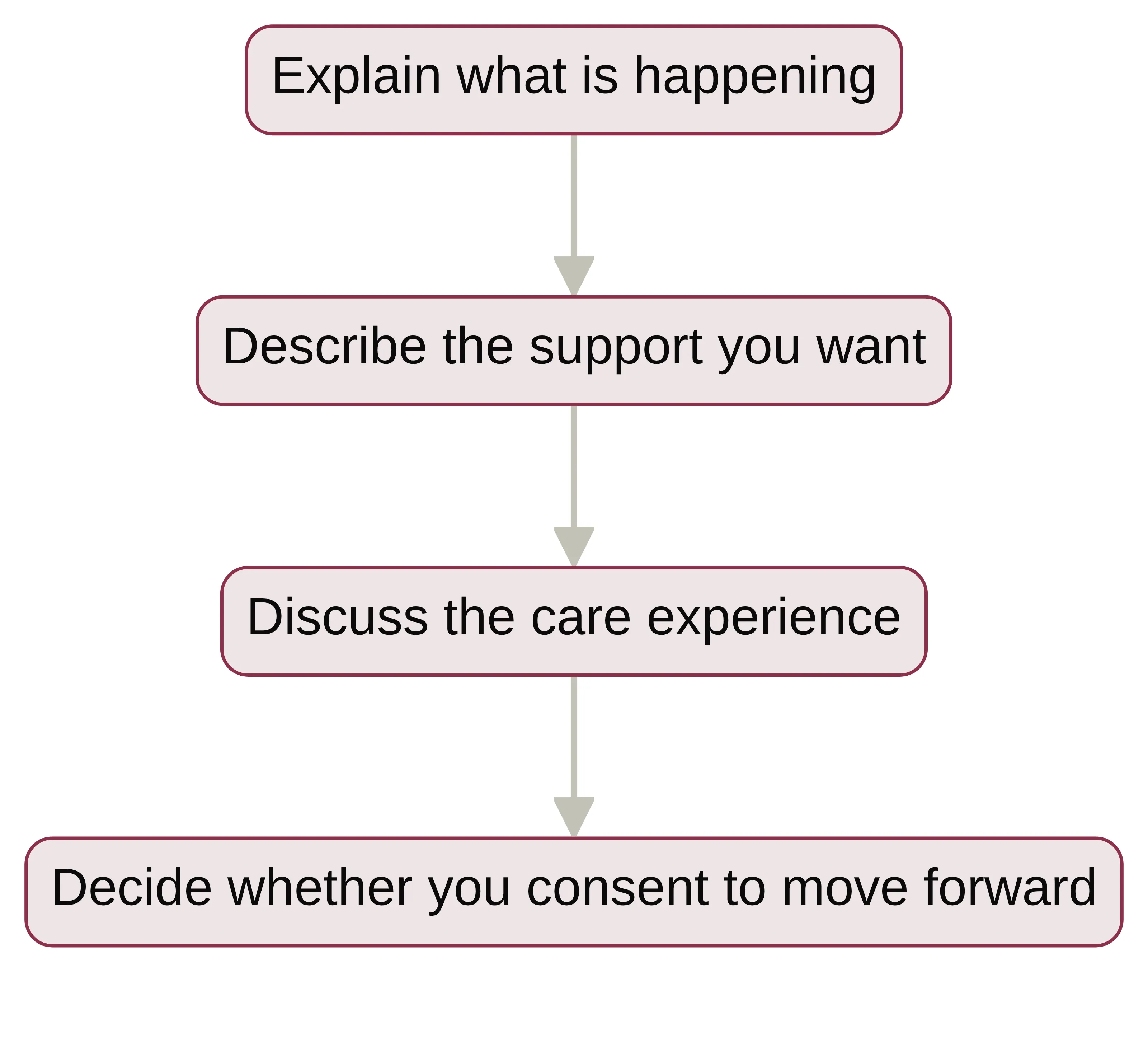
What happens when you reach out
You can make that first message useful by naming the relationship concern, the kind of support you want, and the identity or relationship context you want understood.
Your next step is simply to share enough about what you are facing for a fit conversation to begin.
What should we ask before choosing couples therapy?
What relationship concerns can couples therapy address?
Couples therapy can help with communication breakdowns, recurring conflict, trust issues after infidelity, emotional disconnection, and intimacy concerns.
What should I include when reaching out for couples therapy?
When contacting RelationshipHQ, mention your main relationship concern, the type of support you are seeking (therapy or coaching), and any relevant cultural or identity context that may affect your experience.
What happens during the initial inquiry for couples therapy?
During the initial inquiry, RelationshipHQ will learn about your situation, help you choose a care experience, and obtain your consent to begin the process.
When is joint couples therapy not appropriate?
Joint couples therapy is not suitable in cases of active abuse or coercive control; individual therapy and safety planning are recommended instead.
How can I prepare for my first conversation about couples therapy?
Prepare by identifying the main concern you want to discuss, noting any patterns in your relationship, and considering what you hope to achieve through therapy.