
Is a therapist for a breakup the right next step?
Individual therapy may be a reasonable next step when a breakup leaves you stuck in painful thoughts, unsure what happened, or concerned about how the experience is shaping your relationships. Therapy gives you a private place to understand what you are carrying without reducing your experience to a diagnosis.
We offer therapy for individuals, partners, and families, and we define therapy as healing. For breakup-related stress, that can mean making room for the story of the relationship, the ending, your reactions, and the questions that remain.
Breakup support can make sense if you want help with one or more of these concerns:
- You keep returning to the same questions about why the relationship ended.
- Contact with an ex-partner makes it harder to create emotional space.
- The breakup has changed how you see yourself, your relationships, or your future choices.
- You want to understand patterns without blaming yourself or your former partner for everything.
- You want an affirming setting where your identity, pronouns, relationship structure, and cultural context are treated as part of the conversation rather than obstacles to it.
A 2025 review said breakup effects vary across people and are shaped by relationship, personal, and sociocultural factors. Research linked uncertainty about a breakup’s reasons with rumination and poorer adjustment, although that research did not prove that uncertainty causes those outcomes. These findings can help you name what you want to explore; they cannot predict what therapy will be like for you.
You do not have to decide that therapy is your permanent path before you ask a question. You can also ask how therapy differs from coaching, since we offer coaching services for individuals, partners, families, and organizations. The distinction matters when you are deciding whether you want space to explore the breakup or support with a more focused goal.
What might individual therapy help you explore?
Individual therapy can help you explore how past experiences influence present thinking, relationships, and overall well-being. Through therapy, we help individuals examine those connections rather than treating the breakup as an isolated event.
That exploration may include the meaning you gave the relationship, what changed near the end, how you respond to conflict, or what you want to carry into future relationships. It may also include the parts of the breakup that feel clear and the parts that still feel unfinished. You remain the person who decides which parts of your story you are ready to discuss.
You can ask how a therapist would turn those broad concerns into a conversation. For example, you might want to understand a repeated relationship pattern, make sense of a painful interaction, or name what you need from future connection. If the full story feels too large for a first conversation, start with the part that feels most present. A clear starting point is enough.
A useful first conversation can focus on questions such as:
- What do you understand about why the relationship ended?
- Which parts of the ending keep pulling your attention back?
- What happens in your thoughts, body, or relationships when the breakup comes up?
- What boundaries or contact patterns are making it harder to settle into the present?
- What would you like to understand about your own needs, choices, or expectations?
In a college sample, people who felt certain about why a recent breakup happened reported fewer adjustment problems afterward. That finding does not mean you need a complete explanation before you can move forward, and it does not show that certainty alone produces a particular result. It does suggest that questions about meaning and understanding may deserve room in therapy.
Breakup therapy does not need to follow a single script. A 2025 review found that several therapeutic approaches showed efficacy for breakup-related distress, while also saying that results can differ across cultures and individuals. Your conversation can therefore include the approach, language, identity context, and relationship history that fit your circumstances instead of treating one method as a universal answer.
A practical goal for an opening conversation is clarity. You can describe what is happening now, what you want to understand, and what kind of support you are considering. We can then discuss whether individual therapy matches that starting point.
You can also ask what you and the therapist would focus on first, how your questions would shape the work, and what you can do if the conversation feels too fast or too broad. Those questions keep the discussion connected to your vulnerability and consent. They also help you notice whether the therapist responds with curiosity rather than assumptions.
Why can breakup experiences feel so different?
Breakup experiences can feel very different because relationship history, personal circumstances, and sociocultural context shape how an ending is understood. A 2025 review described substantial variation in the psychological and emotional effects of romantic breakups.
The role you had in the breakup may also affect what follows. The review reported that people who initiated a breakup typically recovered faster, while continued contact with an ex-partner could prolong distress; it also noted differences by gender. Those are patterns from research, not predictions about you. They do not measure the strength of your feelings or tell you how quickly you should recover.
The reasons for an ending can shape the questions you bring to therapy. Research linked uncertainty about why a relationship ended with rumination and poorer adjustment. The research did not establish causation, so you should treat that connection as a reason to explore your questions, not as proof that uncertainty is causing your distress.
Your relationship may also have included family expectations, cultural pressure, discrimination, financial concerns, questions about identity, or different ideas about commitment. These details can affect what connection, vulnerability, and repair mean to you. A therapist who leaves those details out may miss part of the story you are trying to understand.
We offer therapy for individuals, partners, and families. That range matters because a breakup can affect more than your private thoughts: it can change family relationships, friendships, co-parenting conversations, or the way you approach a future partnership.
You can bring the wider context into individual therapy without turning the session into a debate about who was right. Start with the effect the breakup is having on you and the relationships you want to understand. The work can stay connected to your actual life.
A useful decision rule is simple: choose support that makes room for the factors you need to discuss. If identity, culture, gender, relationship structure, or continued contact with an ex-partner affects your experience, ask whether the therapist can discuss those subjects without treating them as side issues. If the answer is unclear, keep asking before you share more.
How is therapy different from coaching?
Therapy and coaching can both involve conversation, reflection, and goals, but they are not the same service. Use the comparison below to identify the kind of support you want to discuss.
| Question | Therapy | Coaching |
|---|---|---|
| What is the service described as? | We define therapy as healing and use it to help individuals explore how past experiences influence present thinking, relationships, and overall well-being. | Mental-health coaching may support stress, routines, or accountability. |
| What boundary matters? | Therapy is the service to discuss when you want to explore breakup-related distress and personal history with a therapist. | Coaching is not therapy and does not replace diagnosis or treatment from a licensed therapist. |
| What should you ask about? | Ask how the therapist would understand your breakup, identity, relationships, and goals. | Ask what the coaching service includes and how its agreement describes its limits. |
| What does RelationshipHQ offer? | Ask whether individual therapy fits your breakup-related concerns. | We offer coaching services for individuals, partners, families, and organizations. |
Mental-health coaching may be a fit for support with stress, routines, or accountability when you are not seeking therapy. It does not replace diagnosis or treatment from a licensed therapist. That boundary becomes especially relevant if your main need is to understand breakup-related distress, past experiences, or patterns in relationships rather than work on a narrow routine or action plan.
You can ask about both services without presenting coaching as a substitute for therapy. A clear question might be: I am dealing with breakup-related stress. How would you describe the difference between your therapy and coaching services for what I want to discuss?
When you consider coaching, ask what the agreement says about the service, obligations, credentials, communication, session length and frequency, fees, payment, and the boundary between coaching and psychotherapy. You do not need to memorize every item. Use the list to identify the practical details that affect your decision.
If you are unsure which service to ask about, say that directly. You can describe the breakup, name the support you want, and ask how the two options differ before choosing a care experience.
What should affirming breakup therapy respect?
Affirming breakup therapy should respect your identity, relationships, language, and reasons for seeking support. For LGBTQ+ adults, that includes more than a welcoming phrase on a website: you need room to ask about identity-specific experience, relevant training, pronouns, safety considerations, and the provider’s position on conversion therapy.
A mental-health screening resource recommends asking those questions directly. A pilot trial found improvements in therapists’ self-reported LGBTQ+ affirming attitudes, confidence, and practices after multilevel training, while describing possible effects on organizational climate as potential rather than established. Training can be one question in your fit assessment; it is not a complete measure of how a particular conversation will feel.
We offer an identity-affirming approach for Black, Brown, Indigenous, Queer, and TGNC people. That is the approach we bring to our practice, while your fit with a particular therapist still needs to be discussed.
You can ask questions such as:
- What experience do you have working with my LGBTQ+ identity or relationship structure?
- How do you use my pronouns, name, and preferred language?
- What training or ongoing learning informs your work with queer clients?
- What is your position on conversion therapy and attempts to change sexual orientation, gender identity, or gender expression?
- How do you think about safety risks or rejection connected to my identity?
- How would you make room for cultural experiences that affect trust, vulnerability, family relationships, or connection?
A direct answer matters because you should not have to spend the whole relationship teaching a provider that your identity and relationships deserve respect. You can listen for whether the response addresses your actual question, leaves room for uncertainty, and treats your boundaries as part of the work.
Affirming care also includes the way a practice handles ordinary interactions. You can ask how names, pronouns, relationship terms, and identity information are handled when you first make contact. You can ask whether the therapist is comfortable discussing breakup grief when the relationship does not fit a straight or monogamous template.
Those questions are not a demand for a perfect answer. They are a way to decide whether the conversation gives you enough respect and clarity to continue. If an answer feels dismissive, evasive, or focused on changing who you are, treat that as a boundary and keep looking for a better fit.
What questions can you ask before sharing more?
Before sharing the full story of a breakup, you can ask focused questions about fit, identity, service type, and next steps. A short first message is enough to explain what you are looking for and learn whether the conversation should continue.
Start with the questions that affect your comfort most:
- Do you work with LGBTQ+ clients and people of color, including the identities and relationship structures relevant to me?
- How do you use pronouns and preferred names?
- What experience or training informs your work with breakup-related stress and identity concerns?
- How do you distinguish therapy from coaching?
- What would you want to understand about my goals before suggesting a service?
- What should I expect from the first step in your process?
A screening resource supports questions about identity-specific experience, training, pronouns, safety considerations, and conversion therapy. Mental-health coaching is not the same as therapy.
When you are ready to share more, give only the information needed to orient the conversation:
- Say that you are seeking individual therapy after a breakup, or that you are comparing therapy and coaching.
- Name the main concern you want to discuss, such as uncertainty about the ending, relationship patterns, identity stress, or difficulty creating space after contact with an ex-partner.
- Include the identity, pronoun, cultural, or relationship context that you want respected from the start.
- Say whether you are looking for care in New York or online support so current service details can be discussed.
- Ask what information the practice needs before you decide whether to continue.
You can begin with the question you most want help understanding rather than trying to tell your entire life story at once.
You might write: I am looking for affirming individual therapy after a breakup. I want to discuss relationship patterns and the effect of the ending on my sense of connection. I would also like to understand whether therapy or coaching fits what I am seeking and what the first step involves.
You can pause when a question feels too personal for an initial contact. You can also ask why the information is relevant and how it will shape the conversation. Fit includes the substance of the response and the way your vulnerability is handled.
How does RelationshipHQ describe its approach?
Through therapy, we help individuals explore the significance of past experiences and how those experiences influence present thinking, relationships, and overall well-being.
For a breakup, this approach can leave room for both the immediate ending and the larger pattern you want to understand. You might want to talk about grief, uncertainty, trust, identity, connection, or vulnerability. You decide which subject belongs in the conversation and how quickly you want to approach it.
Our approach is a starting point, not a promise that every therapist or service will fit every circumstance. Ask direct questions about the kind of support you want, whether you are considering therapy or coaching, and how your identity and relationships will be respected. A clear exchange gives you more information for your decision without requiring you to commit before you are ready.
What does the research leave uncertain?
Research does not give one simple answer about how individual therapy affects romantic relationships. Studies have produced mixed results, with indications that individual therapy helps some relationships while contributing to deterioration in others. A 2025 review also cautioned that much of its evidence came from Western student samples and cross-sectional studies.
Those limits matter if you are hoping therapy will determine whether you and an ex-partner should reconnect, separate permanently, or change the relationship.
Breakup research has its own limits. The 2025 review said recovery can differ by personal and cultural background, and research linked uncertainty about a breakup’s reasons with rumination and poorer adjustment without proving causation. A college sample also found that certainty about why a recent breakup happened was associated with fewer reported adjustment problems.
These findings can help you form questions, but they do not tell you what your breakup means or how your therapy should proceed. You may understand the reasons clearly and still need support. You may remain uncertain and still make choices that reflect your values.
Use research as a guide for discussion rather than a scorecard. You can ask:
- What part of my experience do I want to understand first?
- What would respectful support look like if my relationship story is complicated?
- How can I discuss an ex-partner without turning individual therapy into a judgment about that person?
- What boundaries would help me speak honestly about the relationship and its ending?
The practical value of an initial conversation is learning whether the approach, boundaries, and identity respect fit what you want to explore.
What can you share when you contact RelationshipHQ?
When you contact us, say that you are considering individual therapy for breakup-related stress and name the kind of conversation you want. You can keep the first message brief while still giving enough detail for a useful response.
Include these details if they feel relevant:
- The main concern you want to address, such as uncertainty about the ending, repeated contact, relationship patterns, identity stress, or difficulty reconnecting with yourself.
- The identities, pronouns, relationship terms, or cultural context you want respected.
- Whether you are looking for therapy, considering coaching, or unsure which service fits.
- Whether you are looking for care in New York or online support.
- The questions you want answered before sharing more about the relationship.
Those facts can give you a starting point for describing what you want from the conversation.
You can ask us:
- How do you describe the difference between individual therapy and coaching for relationship stress?
- How does your identity-affirming approach address LGBTQ+ and people-of-color experiences?
- How are pronouns, names, and relationship structures handled in the first conversation?
- What should I know about the service before deciding whether to continue?
- What does the first step involve, and what information should I bring?
If you are considering coaching, ask what the agreement says about the service, communication, sessions, fees, payment, and the boundary between coaching and psychotherapy. If you are considering therapy, ask the questions that help you decide whether the setting supports the vulnerability and connection you want to bring.
A message does not need to prove that you are ready for care. It needs to communicate what you are looking for and what you need to know. We offer coaching services as well as therapy, so naming the difference you are trying to understand helps keep the conversation clear.
What happens before starting care?
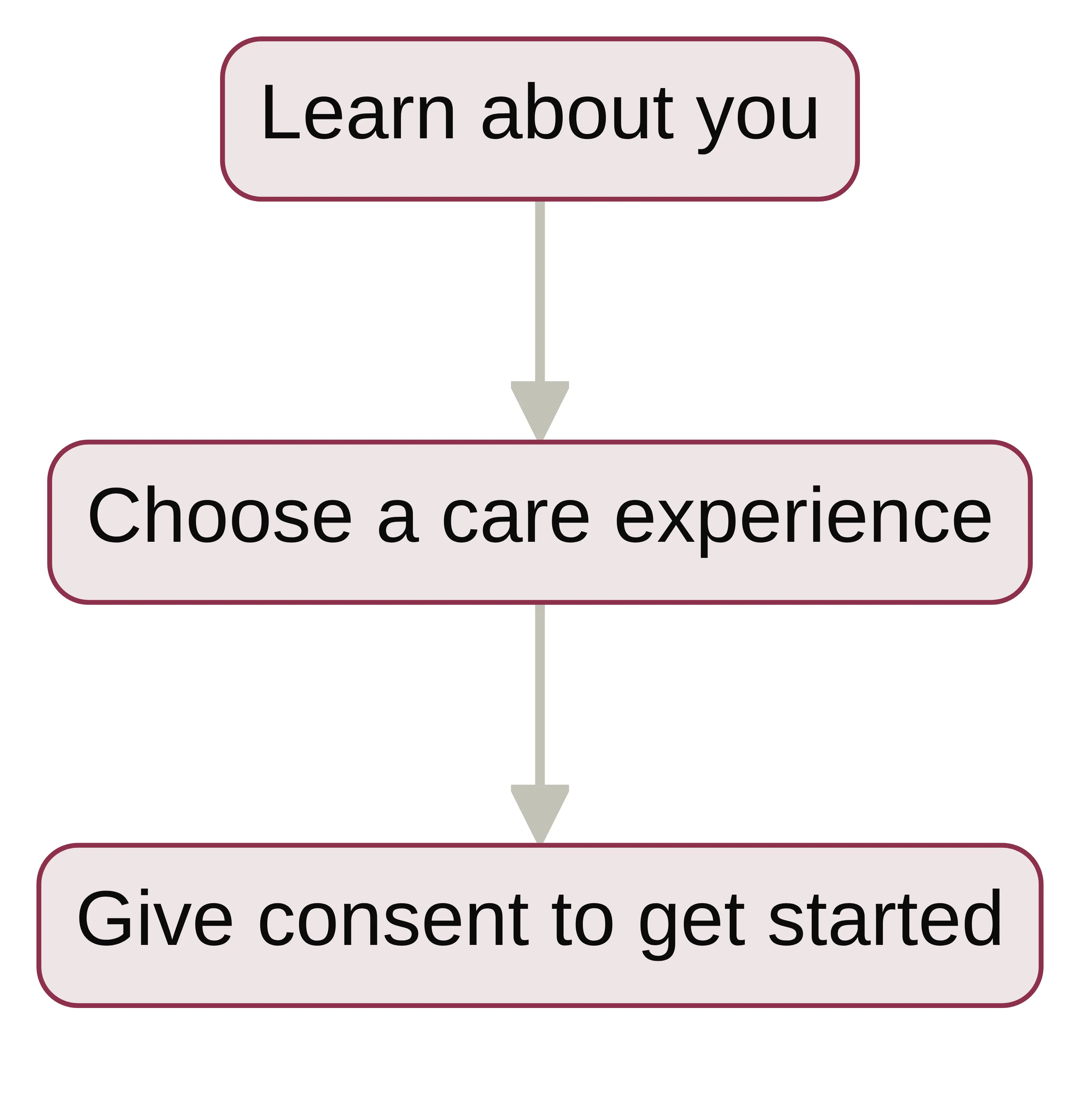
RelationshipHQ describes a three-step process before starting care: learn about you, choose a care experience, and give consent to get started.
- Learn about you. Share the concerns, identity context, relationship questions, and support preferences that matter to you.
- Choose a care experience. Discuss whether therapy or another offered service matches what you want to explore.
- Give consent to get started. Decide whether you understand enough about the care experience to agree to begin.
The process gives you three clear points for questions. You can ask what the practice needs to learn about you, what choices are available, and what you are consenting to before you start.
Consent is more than saying yes to a first conversation. It means having enough information to understand the service you are choosing and enough room to decide whether you want to proceed. If you are comparing therapy and coaching, use the second step to ask about the boundary between them. We offer both services, but coaching is not therapy and should not be presented as a replacement for diagnosis or treatment from a licensed therapist.
You can use this stage to ask what participation will involve, what questions you can bring, and how you can raise a concern about fit. You can also say when you need a clearer explanation before deciding. A consent-based process leaves room for your choice rather than treating your first contact as an automatic commitment.
You can prepare for the first step by writing down three things: what brought you to the conversation, what kind of support you are considering, and what you need respected in the relationship. You do not need to prepare a perfect account of the breakup. Begin with the information that helps you decide whether the process feels clear enough to continue.
How should you decide whether to reach out?
Whether individual therapy fits after a breakup depends on what you want to explore, including the ending, its effect on your relationships, and the patterns or identity questions you want to understand.
Before you proceed, ask yourself:
- Do I want therapy, coaching, or help distinguishing the two?
- Can I describe the main concern I want to bring into the conversation?
- Will I be able to discuss my identity, pronouns, culture, and relationships without defending them?
- Do I understand the three steps: learning about me, choosing a care experience, and giving consent to begin?
- Have I asked the questions that matter most to my trust and vulnerability?
We offer an identity-affirming approach for Black, Brown, Indigenous, Queer, and TGNC people, and we offer therapy for individuals, partners, and families. Use the initial conversation to share what you need, ask what you want to know, and decide whether the fit feels clear enough for you.
What should you ask RelationshipHQ before choosing therapy?
What should I consider when deciding if therapy is right for me after a breakup?
Consider whether you want space to explore the breakup’s impact on your relationships and personal identity. Reflect on your main concerns and whether you feel comfortable discussing your identity and experiences with a therapist.
How can I assess if a therapist is affirming of my identity?
Ask potential therapists about their experience with your specific identity, their training related to LGBTQ+ and BIPOC issues, and how they handle pronouns and names.
What is the difference between therapy and coaching?
Therapy focuses on exploring emotional and psychological issues, while coaching may support stress management and accountability.
What questions can I ask a therapist before sharing my story?
You can ask about their experience with LGBTQ+ clients, how they use pronouns, their approach to breakup-related stress, and how they distinguish between therapy and coaching. These questions help gauge their fit for your needs.
What does RelationshipHQ's therapy process involve?
The process includes three steps: learning about you, choosing a care experience, and giving consent to start.
How does RelationshipHQ approach therapy for individuals after a breakup?
RelationshipHQ prioritizes an identity-affirming approach, helping individuals explore how past experiences influence their present relationships and well-being.
What should I include when contacting RelationshipHQ for therapy?
Mention that you are seeking therapy for breakup-related stress, your main concerns, your identity and pronouns, and whether you prefer in-person or online support.