
Could individual therapy help with trauma-bond concerns?
Individual therapy may be worth exploring when trauma-related experiences, difficult emotional responses, or safety concerns are part of what you are carrying. Trauma-informed therapy focuses on recognizing trauma symptoms, understanding their possible roots, and addressing your experiences and needs in a safe, supportive setting. Therapy can help people understand traumatic events and manage thoughts and emotional responses, but trauma treatment has no one-size-fits-all approach.
A trauma-bond concern does not require you to diagnose yourself before you ask for support. Research describes treatment related to trauma bonds as complex and calls for trauma-informed responses. That means your questions can begin with what you notice, what feels difficult, and what kind of support you are considering rather than with a label you must prove.
If your concern sits across several of those areas, you can describe the overlap in your own words. The purpose of an initial conversation is to explain what you are experiencing and ask whether individual therapy is an appropriate service to discuss.
This guide gives you a way to think through the term, the relationship context around it, and the difference between therapy and coaching. It cannot determine whether a particular relationship is abusive, diagnose you or another person, or tell you whether you must stay or leave.
You can start with a narrow question: “I am noticing a relationship pattern that feels confusing and difficult to step back from. Could individual therapy be a place to talk about it?” That question is enough to begin. You do not need to settle the meaning of the relationship before seeking a conversation about support.
What does trauma bonding mean in plain language?
Trauma bonding is described in the cited research as attachment to a perpetrator of intimate partner violence. The term has been proposed as one possible explanation for why some people do not end abusive romantic relationships. That description is about a relationship context, not a diagnosis that you can assign to yourself or someone else from a list of signs.
The word “bonding” can sound as if the attachment itself is the main problem. A more careful reading keeps the harmful relationship context in view. The research definition refers to intimate partner violence and an abusive romantic relationship, so the term should not be used casually for every painful breakup, intense connection, conflict-heavy relationship, or attachment that feels hard to change.
The phrase can also raise a difficult question: how can attachment and harm exist in the same relationship? The research use of the term tries to describe that tension. You may feel care, loyalty, hope, fear, confusion, or grief while also noticing conduct that leaves you less free to decide what you want. Those feelings do not prove a trauma bond. They are information you can bring to a qualified professional or a trusted support person.
Close relationships can be part of the context in which complex trauma develops, and they can also be a factor that may support recovery after trauma exposure. A literature review also reports that individual trauma symptoms can affect partners and family systems. This helps explain why relationship context may belong in an individual therapy conversation even when you are seeking care for yourself.
RelationshipHQ offers individual therapy that includes relationship concerns, anxiety, identity-related concerns, and intimacy. You can use plain language rather than trying to decide whether the research term applies. For example, you might describe repeated fear, difficulty separating, confusing shifts between harm and closeness, or uncertainty about your own choices. Those descriptions give a provider something concrete to discuss without turning them into a diagnosis.
Why should the term be used carefully?
Trauma-bonding language should keep power, manipulation, and harmful conduct in view rather than placing the whole explanation on your behavior. Some critiques warn that the term can focus too heavily on a survivor’s actions while minimizing an abusive partner’s manipulation and the systems that support entrapment. A treatment chapter also identifies barriers that can include recognizing victimization, difficulty separating from an abusive person, and concerns about safety and self-determination.
That caution changes the question you ask. Instead of asking only, “Why do I keep going back?” you can also ask, “What has been happening around me, and how has it affected my ability to choose?” That wider question does not remove your agency. It avoids treating attachment as proof that you caused the harm or that the other person’s conduct is outside the discussion.
The term should not become a reason to blame yourself. The treatment source names difficulty separating and safety as barriers, but it does not provide a way to measure your circumstances from an article. Bring the circumstances you can name to support that can consider your whole context.
A careful description separates three things: what happened, how you responded, and what conditions shaped the choices available to you. You might write down concrete events without deciding what they mean: a threat, a repeated apology after harm, pressure to withdraw from others, a sudden return to closeness, or a pattern that leaves you afraid to disagree. These examples are prompts for describing your experience, not a test for identifying trauma bonding.
You can also protect your language by saying “I am concerned about a pattern” rather than “I know this is a trauma bond.” That wording leaves room for a professional conversation and keeps the focus on your needs. RelationshipHQ prioritizes the needs of people of color and the LGBTQ community, so identity, race, gender, and relationship context can be part of that conversation when they affect how you experience support.
What patterns might make support worth considering?
A recurring relationship pattern may be worth bringing to therapy when you find yourself trying to understand repeated harm, attachment, fear, or difficulty separating. One clinical source says trauma bonding may develop slowly and return with each cycle of abuse rather than happening overnight. The same source says that, although every situation differs, a trauma-bond cycle frequently develops across seven stages.
The number of stages is not a checklist for you to complete. It does not establish that a relationship is abusive or that you have a particular condition. Its practical value is narrower: it reminds you to look at what repeats over time instead of judging one conversation, one apology, or one period of closeness in isolation.
You might consider writing about these questions:
- What changes before, during, and after a period of harm or intense conflict?
- Do you feel increasingly unable to step back, set a boundary, or make a decision that differs from the other person’s wishes?
- Does closeness after conflict leave you relieved, confused, pressured, hopeful, or afraid?
- What happens to your connection with friends, family, community, or other sources of support?
- What would you want a therapist to understand about your identity, culture, relationship structure, or past experiences?
These questions do not tell you what the pattern means. They give you a way to describe it. A treatment chapter identifies recognizing victimization, difficulty separating from an abusive person, safety, and self-determination as possible barriers, so those subjects can be relevant to a support conversation.
A slow or repeating pattern is not, by itself, proof of trauma bonding. The source describes a possible cycle in the context of abuse, while your situation may have details that the term does not capture. You can seek support because the relationship is affecting your thoughts, emotions, connection, or sense of choice without deciding on a label first.
Those effects give you several ways to describe what brings you in. You might describe how the pattern affects your thoughts, emotions, connection with others, or sense of choice. Use the description that fits your experience, and leave the final clinical meaning to the conversation.
How can you assess a concern without labeling yourself or someone else?
A useful assessment lens focuses on power, repeated harm, manipulation, safety, separation, and self-determination rather than asking whether you match a label. Some critiques warn that trauma-bonding language can minimize an abusive partner’s manipulation and the systems that support entrapment. A treatment chapter identifies difficulty recognizing victimization, separating from an abusive person, safety, and self-determination as possible barriers.
Use the lens to gather information about your experience:
- Power: What choices feel available to you, and what choices feel unsafe or impossible to make?
- Manipulation: Do you feel pressured to doubt your memory, needs, boundaries, or relationships with other people? Describe what happens rather than deciding why it happens.
- Repeated harm: What conduct keeps returning, and what changes afterward? A period of closeness does not erase the event that came before it.
- Separation: What makes distance difficult? Include emotional, practical, financial, cultural, family, housing, or safety circumstances if they matter.
- Safety: What happens when you disagree, set a limit, ask for space, or try to make an independent choice?
- Self-determination: Can you make decisions about your body, time, identity, relationships, and care without pressure or punishment?
These prompts are not a relationship test. They are a way to organize what you already know and identify what you want to discuss. A professional can help you explore the concern without requiring you to label yourself or your partner before the conversation begins.
A survivor-focused explanation can become incomplete when it treats your attachment as the central problem and leaves the other person’s conduct in the background. Keep both parts visible: your feelings and choices matter, and the surrounding behavior and conditions matter too. This approach supports agency without turning agency into blame.
You can also separate uncertainty from inaction. You may not know whether the term applies, what another person intended, or what decision you will make. You can still record what happened, talk with someone you trust, and ask about individual therapy. RelationshipHQ provides therapy for relationships, anxiety, LGBTQ identity, racism, homophobia, transphobia, internalized oppression, and intimacy, so you can name the concern in the language that feels most accurate to you.
Why can connection matter in recovery?
Connection can matter because close relationships may be part of the context in which complex trauma develops and may also support recovery after trauma exposure. A literature review reports that individual trauma symptoms can affect partners and family systems, which supports considering relational approaches to recovery.
This does not mean every relationship should be brought into therapy, that you must contact a partner, or that joint therapy is required. It means your relationships, community, identity, and experiences of trust can be relevant when you are describing what trauma has affected. Individual therapy can give you a place to begin with your own experience and decide what parts of your relational context you want to discuss.
Connection also includes the relationship you have with yourself. You may be trying to understand why you stayed, why you returned, why you still care, or why making a decision feels difficult. Those questions can carry vulnerability without proving that you caused the situation. A supportive conversation can hold care, confusion, anger, grief, and uncertainty at the same time.
A literature review identified 41 eligible studies evaluating 32 different family-inclusive or relational approaches to trauma recovery. The number 41 refers to eligible studies, and the number 32 refers to the different approaches evaluated; neither number tells you which approach fits your circumstances or predicts an outcome for you.
The review supports keeping relational context in view, not prescribing one form of care. You can ask an individual therapist how they would make room for your relationships, chosen family, cultural context, or community without assuming that another person needs to participate. If a relationship affects your sense of safety or choice, say that directly. RelationshipHQ provides individual therapy for relationship concerns and intimacy, and its stated priority includes people of color and the LGBTQ community.
What can individual therapy offer for this concern?
Individual therapy can offer a place to recognize trauma symptoms, explore their possible roots, and discuss your experiences and needs in a supportive setting. Trauma-informed therapy focuses on those tasks. Therapy can also help people understand traumatic events and manage thoughts and emotional responses, while treatment related to trauma bonds can remain complex and calls for trauma-informed responses.
That description does not promise that therapy will end a trauma bond, change another person, or settle a relationship decision. It describes the work you can bring into a clinical conversation: making sense of what happened, noticing how your thoughts and emotions respond, considering the relationship context, and discussing what support feels appropriate. There is no one-size-fits-all approach to trauma treatment.
A first conversation might include questions such as:
- How do you work with relationship patterns that involve fear, attachment, or difficulty separating?
- How would you keep the other person’s conduct and the wider context in view rather than focusing only on my responses?
- How can we discuss identity, race, gender, culture, chosen family, or LGBTQ+ relationships in a way that feels affirming?
- How would we decide what to discuss first if safety, anxiety, grief, and relationship stress overlap?
- What would individual therapy cover, and what would fall outside its role?
You do not need to know the answers before you contact a practice. The questions help you explain what you need from the conversation.
Those questions are prompts for a first conversation; they do not determine whether the service fits your specific circumstances.
You can ask about the concern in ordinary language. “I am dealing with a relationship pattern that affects my anxiety and makes it hard to trust my choices” is more useful than forcing yourself to use a clinical term. You can also mention whether you are looking for space to understand the pattern, support with emotional responses, or help deciding what questions to ask next.
To prepare without turning your notes into a diagnosis, separate what you have noticed from what you think it means. If it is safe to do so, a private note can use headings such as these:
- What I notice: Describe a specific event or recurring sequence in plain words. You might record what happened before a conflict, what happened during it, and what changed afterward. You do not need to decide whether the sequence proves a trauma bond.
- What it affects: Note changes in your thoughts, emotions, connection with other people, or sense of choice. This can help you explain why you are considering support even when the relationship label remains uncertain.
- What surrounds it: Include the identity, race, gender, culture, relationship structure, chosen family, or past care context that affects how you experience the situation or seek support. Share only what you want to share.
- What you want from therapy: Say whether you want help understanding traumatic events, managing emotional responses, discussing relationship context, or considering what questions to ask about safety and self-determination.
- What you need to ask first: List questions about affirming care, privacy, the difference between individual therapy and coaching, and what you can expect before you consent to begin.
Separating these areas can keep the conversation from narrowing too quickly around a label. It also lets you name both knowledge and uncertainty: you may know that a repeated pattern affects your anxiety or makes separation difficult, while not knowing what the pattern means or what another person intended. That distinction matters because the article cannot assess a specific relationship, and a professional conversation should not begin with an assumption that you have already reached a clinical conclusion.
When deciding what to mention first, lead with the concern that determines the service question. If trauma-related experiences, emotional responses, or safety concerns are central, say that you are asking about individual therapy. If your main request is clarity about relationship wants, needs, or goals without presenting coaching as therapy, ask how relationship coaching works. If both concerns are present, say so directly and ask the practice to explain the boundary between the services. You do not have to select a final label before asking the question.
A short note can also state what you are not ready to discuss. For example, you can say that you want to begin with the effect on your emotions or choices, or that you need to understand privacy before sharing more. This does not replace a full conversation, and it does not create a safety plan. It simply gives you a way to enter the conversation at a level of detail that feels workable while keeping your support request clear.
How is therapy different from coaching here?
Therapy and coaching are separate forms of support, and trauma-related experiences, emotional responses, or safety concerns are reasons to ask about individual therapy rather than treating coaching as a substitute for clinical care. A cited source warns that presenting coaching as therapy can create ethical concerns and risk when serious mental health conditions are present.
RelationshipHQ provides individual therapy for concerns including relationships, anxiety, work stress, identity, LGBTQ identity, coming out, gender dysphoria, racism, homophobia, transphobia, internalized oppression, and intimacy. RelationshipHQ also offers coaching for individuals, partners, families, professionals, teams, and organizations, including relationship coaching and race- and identity-sensitive conversations. Its relationship coaching focuses on clarity and insight to help people meet their relationship wants, needs, and goals.
The practical difference is not that one service is appropriate for every person or that coaching has no value. The difference is the concern you are bringing and the kind of care you are asking about. If the central concern involves trauma-related experiences, serious mental health symptoms, or safety, ask about individual therapy. If you are seeking clarity around relationship wants, needs, and goals without presenting coaching as therapy, you can ask about relationship coaching.
| Question | Individual therapy | Relationship coaching |
|---|---|---|
| What can you ask about? | Trauma-related experiences, emotional responses, relationships, anxiety, identity, or intimacy | Clarity and insight about relationship wants, needs, and goals |
| What boundary matters? | Ask about the clinical care that fits the concern | Do not treat coaching as therapy when clinical care may be needed |
| What does RelationshipHQ state it offers? | Individual therapy for the listed relationship, anxiety, identity, and intimacy concerns | Relationship coaching, along with coaching for individuals, partners, families, professionals, teams, and organizations |
| What can you do next? | Describe the concern and ask whether individual therapy is the relevant service to discuss | Describe the relationship goal and ask whether coaching addresses that goal |
The table is a starting point, not a clinical determination. You can ask the practice to explain the service boundary in terms you understand. When the concern includes possible trauma, safety, or serious mental health symptoms, keep the question centered on individual therapy rather than asking coaching to carry a clinical role.
Coaching can be useful for goals that fit its stated role, but it should not be presented as therapy. The cited source describes risk when the two are confused, especially when serious mental health conditions are present. That boundary protects clarity about what you are asking for.
You can mention both services when you contact RelationshipHQ if you are unsure where your concern belongs. Start with the concern itself: “I want help understanding a relationship pattern that feels connected to fear and emotional distress. Should I ask about individual therapy?” That question leaves room for the practice to discuss the service without requiring you to choose the label alone.
What should affirming care make room for?
Affirming care should make room for your identity, relationships, culture, and past experiences without requiring you to defend who you are before discussing why you came in. Research on LGBTQ+ young people reports barriers to affirming healthcare that can include stigma, fear of rejection, concerns about disclosure, and negative provider experiences. The same research says access is not equal across LGBTQ+ communities and that transgender and non-binary people often face greater challenges obtaining gender-affirming care.
Research also reports that LGBTQ+ people, particularly Black and Indigenous people, may delay care, mistrust providers, or use protective strategies in response to healthcare bias and discrimination. These findings do not tell you how your own care will feel. They do explain why questions about fit, identity, privacy, and respect can be practical rather than excessive.
You can decide what context to share and when. That may include your name, pronouns, gender, sexual orientation, race, cultural background, relationship structure, chosen family, or a past experience with care. You do not owe a practice every detail in a first message. Share the information that affects what you need to ask.
RelationshipHQ states that it prioritizes the needs of people of color and the LGBTQ community. It also provides individual therapy for concerns that include LGBTQ identity, coming out, gender dysphoria, racism, homophobia, transphobia, internalized oppression, relationships, and intimacy. Those are first-person service facts about the practice, not a promise that every person will experience the same fit.
You can ask direct questions before sharing more: “How do you approach LGBTQ+ and race-related concerns in individual therapy?” “Can I use my chosen name and pronouns?” “How do you discuss relationships that do not follow a traditional model?” “How do you handle privacy when I am not ready to involve anyone else?” Ask only what you need to decide whether continuing the conversation feels appropriate.
What can you share when you contact a practice?
A contact message can briefly describe the concern, the support you want, and the questions that matter to you. You do not need to provide a complete history or diagnose yourself.
You can use this short checklist:
- Name the concern in your words. Say that you are noticing a relationship pattern involving attachment, fear, repeated harm, emotional distress, or difficulty separating. Use the words that feel accurate.
- Name the support you want. You might want individual therapy to understand what is happening, discuss emotional responses, or ask about safety concerns.
- Add the context that changes the conversation. Include relevant identity, race, gender, culture, relationship structure, chosen family, or past care experiences if you want the practice to know them.
- Mention a safety concern in general terms. You can say that safety affects what you are able to share or that you need the conversation handled carefully. Do not send details that could put you at greater risk if someone else can access your messages.
- Ask about affirming care. Ask how the practice approaches LGBTQ+ identities, people of color, pronouns, chosen names, cultural context, or relationship diversity.
- Ask which service to discuss. Say that you are asking about individual therapy for a trauma-bond concern or related relationship stress. If you are also curious about coaching, ask how the two services differ rather than treating them as interchangeable.
Questions can make a first contact more focused:
- Does individual therapy address relationship patterns involving trauma-related experiences or emotional distress?
- How do you keep the focus on both my responses and the other person’s conduct or the wider context?
- How can I discuss LGBTQ+ identity, race, culture, gender, or relationship structure in therapy?
- What information would help you understand what I am seeking?
- How is individual therapy different from the coaching you offer?
- If I am unsure whether my concern belongs in therapy, what is the appropriate way to describe it?
The distinction between therapy and coaching matters because coaching should not be presented as therapy, and doing so can create ethical concerns and risk when serious mental health conditions are present. Asking about individual therapy is a reasonable way to keep the service boundary clear.
You can keep the message short. A few accurate sentences are enough to open a conversation. You can share more after you understand how the practice handles your questions, identity, privacy, and service request.
What happens when you contact RelationshipHQ?
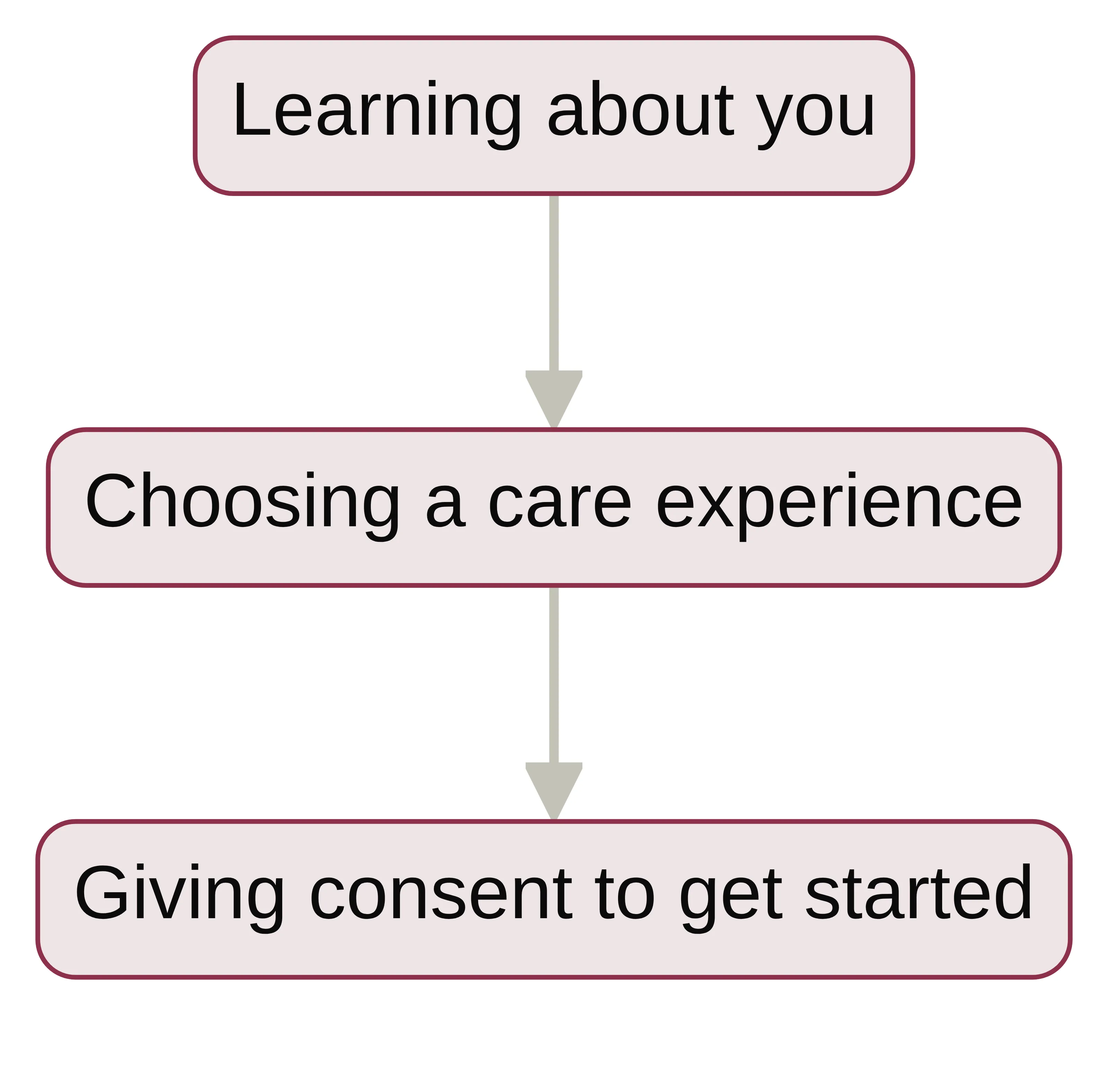
RelationshipHQ describes its process in three steps: learning about you, choosing a care experience, and giving consent to get started. The process begins with your context rather than requiring you to arrive with a finished diagnosis or a settled relationship decision.
You can use the first step to explain what you notice, what support you are considering, and what identity or relationship context matters. The second step is choosing a care experience, so ask how individual therapy differs from coaching if both seem relevant. The third step is giving consent to get started, which means the process includes your agreement rather than assuming that contact itself commits you to care.
This three-step description is a process outline, not a clinical determination or a promise of fit. You can ask questions before deciding whether to continue. A simple opening might be: “I am looking for individual therapy to discuss a relationship pattern that feels connected to emotional distress and difficulty separating. I also want affirming care that respects my identity. What would the next conversation cover?”
What should you remember before choosing support?
Treatment related to trauma bonds can be complex, and a treatment chapter identifies possible barriers that include recognizing victimization, difficulty separating from an abusive person, safety, and self-determination. Those barriers can affect what you are ready to discuss and what kind of support you want to explore first.
Evidence-based treatments exist for trauma-related mental health disorders, but that statement does not identify a treatment for you or promise a particular result. Trauma-informed responses are relevant because the concern can involve power, attachment, fear, harm, and the conditions that make separation difficult. A careful conversation can hold uncertainty without turning uncertainty into blame.
Before choosing support, keep these boundaries in mind:
- You do not need to prove a trauma-bond label to ask about individual therapy.
- An article cannot determine whether your relationship is abusive or tell you whether you must leave.
- A repeating pattern is a reason to gather support, not proof of a diagnosis.
- Your identity, culture, relationships, and past experiences can affect what affirming care needs to make room for.
- Coaching and therapy have different roles; coaching should not be presented as therapy when clinical care may be needed.
- You can ask what a practice offers before deciding whether the service fits your concern.
RelationshipHQ provides individual therapy for relationship stress, anxiety, identity-related concerns, and intimacy. It also offers coaching with a focus on relationship clarity, insight, wants, needs, and goals. Naming the concern first can help you ask about the service whose role matches the support you are considering.
Therapy has no one-size-fits-all approach to trauma treatment. You can treat that as a reason to ask questions, not as a reason to wait until you are certain. Ask how the provider understands trauma-related experiences, how they approach relationship context, and how they make room for your identity and self-determination.
You can also choose the pace of disclosure that feels workable. Start with the facts and questions that affect your immediate decision. Add detail when you understand the care setting and feel able to do so. If you are worried that someone else may see your messages or monitor your communication, keep your contact brief and consider what method of communication is safer for your circumstances.
What if there is immediate danger?
Immediate danger calls for urgent local help rather than waiting for an article or routine practice contact. If you cannot safely make a call or send a message, choose the local emergency or crisis option that is available and safe for your situation. This guide cannot assess the danger, create an individualized safety plan, or provide emergency, legal, or clinical advice. Focus first on reaching urgent support in your area.
Is contacting an affirming individual therapy practice a reasonable next step?
A trauma-bond concern is a reason to look at context, power, safety, connection, and support—not a reason to blame yourself or force a label. Start with what you notice and what you need to understand. A clear first question is enough.
If you would like to talk this through with someone, see individual therapy or relationship counseling for couples, or reach out and we will help you find the right fit.
What should you ask before contacting an affirming therapy practice?
What patterns might make support worth considering?
If you notice recurring relationship patterns involving attachment, fear, or difficulty separating, it may be beneficial to seek support.
How can you assess a concern without labeling yourself or someone else?
Focus on the dynamics of power, repeated harm, and safety rather than trying to fit your experience into a specific label. This approach allows for a more nuanced understanding of your situation and can guide your conversation with a therapist.
What should affirming care make room for?
Affirming care should accommodate your identity, relationships, culture, and past experiences without requiring you to justify who you are.
What can you share when you contact a practice?
When reaching out, briefly describe your concern, the support you seek, and any relevant context about your identity or experiences. You don’t need to provide a complete history or diagnose yourself.
How is therapy different from coaching here?
Therapy addresses trauma-related experiences and emotional responses, while coaching focuses on clarity around relationship goals. It’s important to seek therapy for serious mental health concerns rather than treating coaching as a substitute.
What happens when you contact RelationshipHQ?
The process at RelationshipHQ involves three steps: learning about you, choosing a care experience, and giving consent to get started. This approach allows you to discuss your needs without requiring a diagnosis upfront.